
 Analysis by Gamescozy
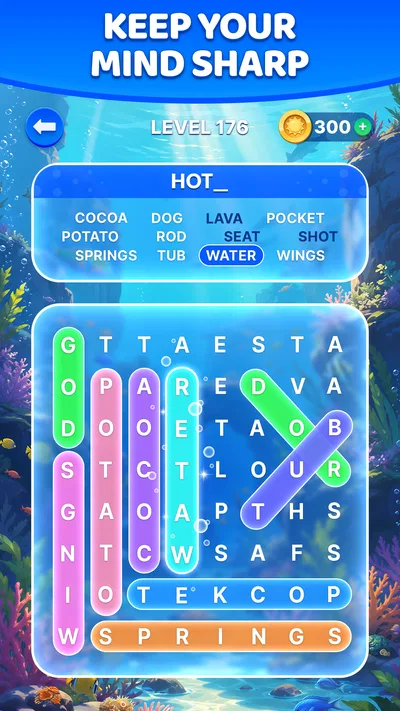
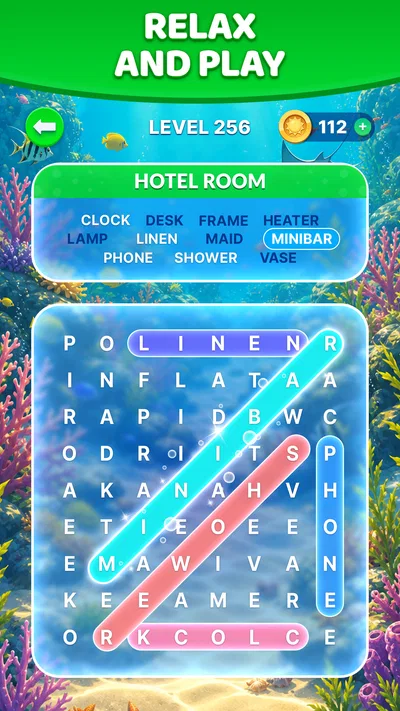
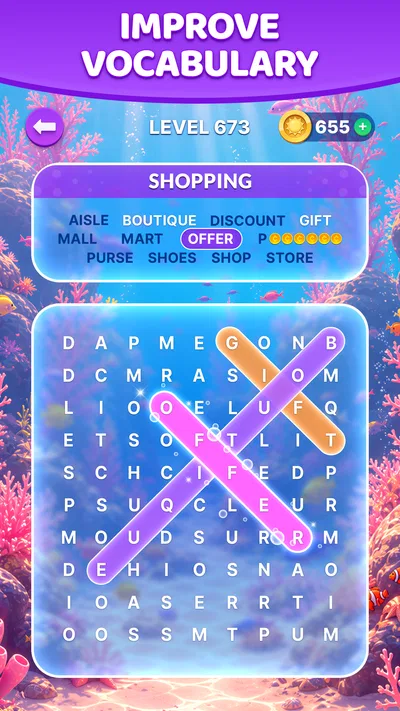
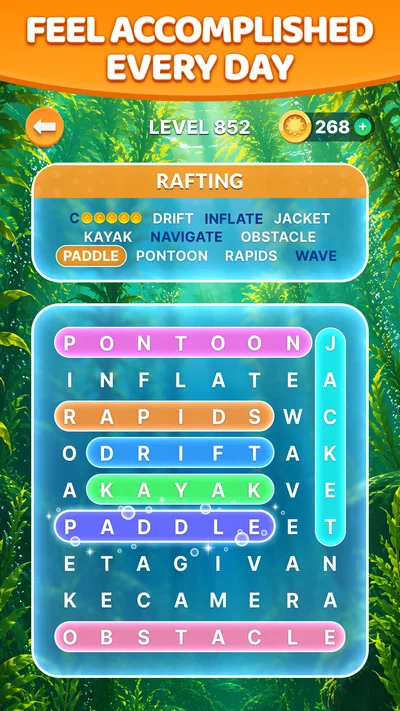
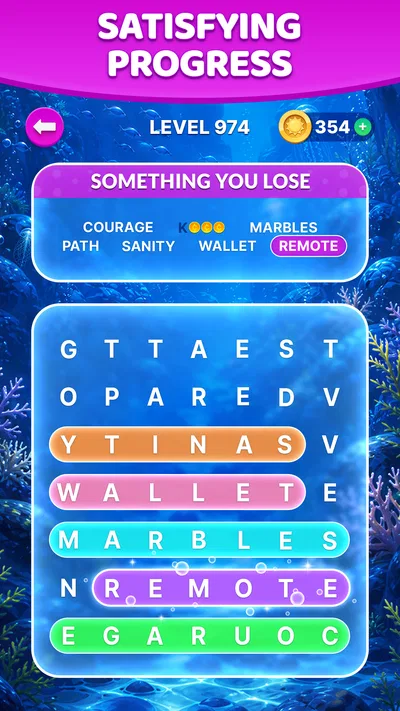
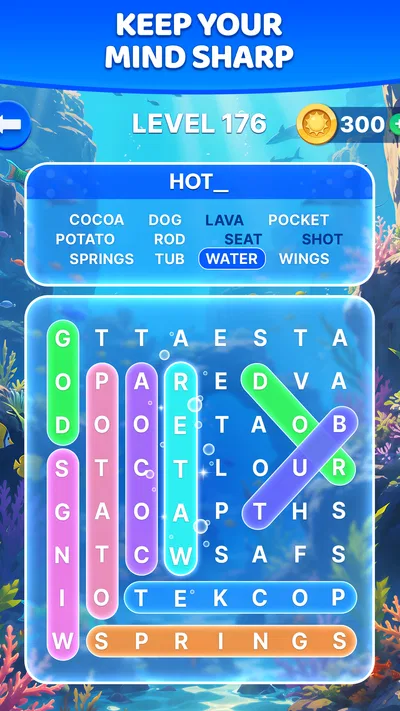
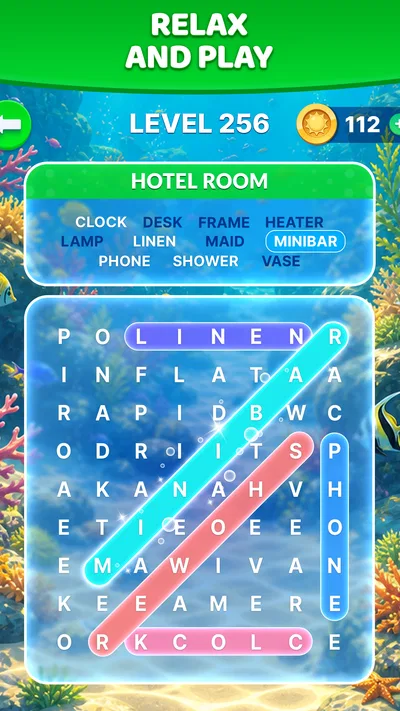
I like word games that give me a clear little task without demanding a long session, and Wordscapes Search is built around that kind of stop-and-start play. It is a word-search game from PeopleFun: you look for words in letter grids, with scenic imagery giving the puzzles a calmer feel than a bare list of letters. The basic idea is easy to understand, but the enjoyment depends on whether you like spotting words at your own pace rather than racing through a story or competing against other players.
Small goals make it easy to begin
The first appeal is how quickly a puzzle gives me something to do. I can glance at the available letters and start tracing likely words, without spending time learning a complicated ruleset. That makes it a comfortable choice for a short break, a quiet commute, or a few minutes before bed. I do not need to plan a long play session to feel that I have finished a self-contained task.
The game’s word-search format also gives each round a practical goal: find the words hidden in the grid. That is more satisfying than simply tapping through a sequence of prompts, because I am scanning, testing patterns, and noticing how one answer can make the remaining letters easier to read. When I get stuck, changing my scanning direction or looking for a less obvious letter combination often helps more than staring at the same part of the board.
The scenery helps set the mood, but it is not the main reason I would recommend the game. I see it as a pleasant backdrop for focused searching, not as a substitute for deeper exploration or a narrative. If you want a word puzzle that is gentle to pick up and put down, that balance works well. If you want a strong plot, elaborate character progression, or a competitive match, this is probably not the right fit.
Progress you can feel without a complicated system
In a word-search game, progress is most immediately visible in the grid itself: a word you were unsure about becomes a solved part of the puzzle, and the remaining search space feels more manageable. I enjoy that small feedback loop. Each discovery gives me a reason to scan again, and completing a board provides a clean stopping point rather than leaving me with a task that feels unfinished.
That style of progress suits players who prefer a steady sequence of bite-size goals. It is also useful when I have only a few minutes and do not want to remember a complicated objective after closing the game. I can play a puzzle, put the phone away, and return later without needing to reconstruct a long chain of events. The trade-off is that the satisfaction comes mainly from solving the words in front of me; players who need a broader sense of character growth or a changing campaign may find the loop too modest.
A practical habit that improves the experience is to scan systematically instead of making random guesses. I start with longer or more distinctive letter patterns, then check shorter possibilities once the grid has become less crowded. This is not a special mechanic; it is simply a better way to use the format. It can keep a puzzle relaxing while still giving the mind something to work on.
How the challenge feels as you play
The challenge comes from visual search and vocabulary, so it can vary from person to person. A familiar word may jump out immediately for one player and remain hidden for another, especially if they tend to scan only horizontally or in one direction. When I hit that wall, I try looking from a different starting point, tracing the letters more deliberately, and checking the board in sections rather than repeatedly searching the whole thing.
This makes the game less about speed than sustained attention. I can take my time, which is a real advantage when I want a calm puzzle, but it also means that a difficult board can feel slow if I am in the mood for quick wins. The best approach is to treat a pause as part of the experience: step away, then return with fresh eyes. A word that seemed invisible can become obvious once I stop forcing the same scan.
Compared with a crossword, this is more about recognizing letter paths than using clues to retrieve facts. Compared with a word scramble, it asks me to find words in a visual arrangement rather than rearrange a loose set of letters. Those differences make it a good alternative when I want vocabulary practice without clue-solving, or a change of pace from anagrams. On the other hand, people who enjoy deduction from hints or constructing words from a rack may prefer those other formats.
The early learning curve is gentle because the central action is immediately clear. The more meaningful challenge is whether the grids continue to hold your attention as you become familiar with the routine. I would not choose this for a high-pressure test of speed; I would choose it for low-stakes concentration. That distinction matters, because a quiet search puzzle and a timed head-to-head word game can both involve vocabulary but serve very different moods.
A steady rhythm, with a limit to its pull
The game’s short-puzzle structure makes it easy to fit into daily gaps. I can use it while waiting for an appointment or winding down at home, then stop after a completed board. That is a healthier fit for casual play than a format that makes every session feel like a commitment. It also means the game does not need to dominate my attention to feel useful: a few solved words can be enough for one sitting.
There is a flip side to that simplicity. If I am looking for a dramatic reason to keep playing, such as a story turning point or a match against another person, the word-search loop may not provide the kind of urgency I want. Its retention comes from the appeal of another puzzle and the satisfaction of finishing it, not from a premise I would describe as gripping. I think that is a strength for relaxed players and a limitation for anyone who needs stronger variety or social competition.
Optional spending is worth keeping in mind. The game is free to download, while in-app purchases range from $0.99 to $99.99 per item. I would approach those purchases as optional rather than necessary to enjoy the core word-search idea, and I would check the in-game purchase details before buying anything. If you are setting up a device for a child, that is a sensible step even though the game has an Everyone age rating.
One useful way to decide whether it will stick is to notice what you enjoy after several puzzles: the search itself, the calm presentation, or simply clearing a board. If you mostly enjoy the first two, the format is likely to suit you. If the appeal fades as soon as the novelty of finding words wears off, a crossword collection or a competitive word game may offer more variation. I would not keep playing just because the next puzzle is available; the best reason is that the act of searching feels satisfying.
Who I would recommend it to
I would suggest it to someone who likes word games but does not want every session to involve a timer, a rival, or a complicated set of rules. It is especially convenient for casual players who want a focused activity that can be paused naturally. The scenic presentation may also suit someone who prefers a softer atmosphere to a stark puzzle interface, although the appeal still depends on enjoying the word-search task itself.
I would be less likely to recommend it to a player who wants broad strategic decisions, a rich progression system, or a steady stream of distinct game modes. It is also not the strongest choice if you dislike scanning letter grids or find visual search tiring. In that case, clue-based crosswords or word-building games may be more comfortable because they ask you to think about language in a different way.
On Android, the listed minimum operating-system requirement is version 7.0, and the current version is 1.56.0. The game has a 4.7 average from around 234,000 ratings, with about 50,000 written reviews and over 10 million installs. Those figures suggest that it has reached a large audience, but they do not tell me whether its particular rhythm will suit you; trying a few puzzles is a better test than relying on popularity alone.
PeopleFun released it on November 22, 2019, and the game remains free to start. I see that combination as a low-risk way to find out whether its leisurely word-search style fits your routine, while remembering that optional purchases are part of the experience. The important question is not whether it offers the most elaborate word-game structure, but whether you enjoy quietly noticing words in a grid.
My progression verdict
Wordscapes Search works best when I treat each puzzle as a small, complete goal rather than expecting a sweeping journey. Its early appeal is immediate, its progress is easy to read in the grid, and its challenge rewards patient scanning more than speed. That gives it a comfortable place in a casual game rotation, especially for short breaks and relaxed evenings.
My reservation is that the same focused loop can feel repetitive if I need stronger variety, competition, or a narrative reason to continue. I would recommend it to a friend who enjoys spotting words and wants a calm game to dip into. I would point a friend seeking deeper strategy or more dynamic challenges toward another kind of word game. For the right player, its modest goals are the point: finish a puzzle, enjoy the little moment of recognition, and stop whenever you have had enough.